May 1, 2026
Over the past decade, Costa Rica has steadily positioned itself as one of the most compelling destinations for relocation and real estate investment in Latin America. That positioning accelerated during the pandemic, when a significant number of international buyers began rethinking not only where they lived, but how they lived.
For some, the decision was driven by a long-standing aspiration to live closer to the ocean, in a place defined by climate, landscape, and a pace of life that feels more intentional. For others, it was a strategic move into a market that showed clear signals of growth, global visibility, and long-term stability. For many, it was both.
While the initial surge of post-pandemic demand has since stabilized, the underlying fundamentals remain strong. Tourism continues to be one of the primary drivers of Costa Rica's economy, contributing around 8 percent of GDP directly, and more than 13 percent when indirect impact is considered, according to the World Travel & Tourism Council. In 2024, the country received 2.66 million air arrivals, the highest figure in 16 years, with Guanacaste capturing a growing share of that demand thanks to its international airport and coastal appeal. This sustained interest has translated into consistent real estate activity, with Guanacaste seeing one of the highest concentrations of new development in the country.
And yet, beneath the surface of what often looks like an obvious decision, there is a more nuanced reality, and a more interesting one. Purchasing property here is not only a financial move. It is a decision that reshapes daily life, priorities, and long-term expectations. The good news is that for buyers who come in with clear eyes, the picture is genuinely compelling. This guide is about helping you see it fully.
1. Climate, Natural Risks, and What You're Actually Signing Up For
The Weather Advantage
Guanacaste's climate is one of the strongest arguments for buying here. The dry season runs roughly from December through April, bringing warm temperatures, consistent sunshine, and low humidity. The rainy season follows from May through November, with the highest humidity in general reaching 99%, with afternoon storms that tend to roll in and clear out but leaving mornings largely untouched. Temperatures stay between 25°C and 34°C (77°F to 93°F) year-round, which for anyone coming from Canada, the northern U.S., or northern Europe represents a meaningful and lasting improvement in daily conditions.
Many long-term residents plan outdoor activities early in the morning during those months and treat the afternoons as a natural pause in the day. It becomes part of the routine rather than something to fight.
Hurricanes: Not a Real Threat
Guanacaste sits outside the main hurricane belt that has caused billions in structural damage each season across Mexico's Caribbean coast and the southeastern United States. Direct hurricane impact here is effectively negligible, which is a genuine and underappreciated advantage for property owners thinking about long-term insurance exposure and physical risk.
Wildfires: Real, but Actively Managed
During the dry season, Guanacaste's tropical dry forest becomes highly flammable, and wildfires are an annual reality. What's important to understand is that approximately 95% of wildfires in the region are caused by human behavior, primarily burning waste and clearing land through fire, a practice still common in agricultural and rural communities, rather than natural ignition. Strong winds in March and April can escalate a small flame quickly.
According to SINAC (Costa Rica's National System of Conservation Areas), Guanacaste's tropical dry forest ecosystem makes the region particularly vulnerable to fire spread. By 2026, fires had cumulatively burned through approximately 28,000 hectares in recent years. The environmental damage, including habitat loss, species mortality, and air quality impacts, is real. The impact on residential structures has historically been far more limited.
Costa Rica has operated under a National Fire Management Strategy since 1997. The Benemérito Cuerpo de Bomberos and SINAC coordinate local fire brigades, helicopter water drops, and retardant deployment across the region. In well-planned communities, firebreak trails serve as wide cleared corridors that interrupt fuel continuity and slow fire spread significantly. The response infrastructure exists and has kept residential losses low.
If wildfire risk is something you're thinking about, the right question when evaluating a property is not whether fires happen in Guanacaste generally, but whether the specific community you're considering has active fire brigades, maintained firebreak systems, and property insurance that covers this kind of event. The answer varies significantly by location, and it's worth asking directly.
Seismic Activity: Frequent, Rarely Catastrophic
If you visit Costa Rica's National Seismological Network website, you'll find that small earthquakes happen constantly across the country. The data can look alarming at first glance. In practice, the vast majority of those events are imperceptible, they register on instruments but people don't feel them. Tremors that are actually noticeable, can happen a few times a year, and every so often one is more significant.
That said, truly large earthquakes do occur in Costa Rica. The country sits on two tectonic plates, and that geological reality isn't going away. When a 7.6 magnitude earthquake struck Costa Rica, the structural damage was far below what the same event would have caused in most neighboring countries. The reason is a construction culture built around reinforced concrete and steel, backed by a seismic code that has been updated four times since 1974 and is modeled on California's standards. Costa Rica doesn't just have good regulations on paper, enforcement through the professional engineering colleges is genuine. Properly permitted and constructed buildings are designed to flex and absorb seismic forces and large-scale residential damage from even significant earthquakes is unusual in modern permitted structures. The meaningful risk concentrates in informal construction or buildings that are very old and predated the current codes.
Volcanoes: Context Matters
Guanacaste is the second largest province in Costa Rica, covering about 10,140 square kilometers, roughly 20% of the national territory. That size matters when talking about volcanoes, because the province is home to five of them: Rincón de la Vieja, Miravalles, Tenorio, Orosí, and Cacao, all part of the Cordillera Volcánica de Guanacaste, a mountain range that runs roughly 70 kilometers from northwest to southeast along the province's eastern edge.
Of the five, Rincón de la Vieja is the only one showing active eruptive behavior. Located about 23 km northeast of Liberia, it has been in an ongoing eruptive period since 2021. Its activity is phreatic, meaning the eruptions are driven by steam and gas from groundwater meeting hot volcanic material, not by magma reaching the surface. No lava flows, no ash clouds covering towns. The most recent significant event, classified by OVSICORI-UNA as the most energetic of 2026, occurred on April 27 and produced no lahars or debris flows affecting any communities. For reference, the last major magmatic eruption from Rincón de la Vieja happened approximately 3,500 years ago. Miravalles and Tenorio have no documented eruptive activity in historical times, though both show geothermal activity, which Guanacaste actually puts to good use, since Miravalles contributes to the geothermal energy that powers a portion of the national grid.
The coastal communities where most buyers are looking, sit 40 or more kilometers to the west of Rincón de la Vieja. OVSICORI-UNA monitors activity continuously and publishes regular public alerts. Volcanic activity here is something locals are aware of and scientists track closely. It is not something that defines daily life on the coast.
Flooding and Drainage: The Risk Most Buyers Underestimate
This is where location selection matters more than most buyers realize before they've lived through a rainy season.
Guanacaste remains rural at its core. Despite growing development, much of the region still lacks formal sewage and drainage infrastructure, and that has direct consequences when the rains arrive. In areas with insufficient drainage planning, intense downpours can create flooding and pooling that lasts for days. When rivers rise, low bridges become impassable.
Nosara is one of the best-known examples. During heavy rainy season events, river levels can rise to the point where certain bridges are submerged, temporarily cutting the community off from outside access for hours at a time. This is not a rare edge case. It is a recurring seasonal reality that residents know and plan around.
Santa Teresa has experienced rapid growth in recent years, but drainage and sewage infrastructure have not kept pace with development in all areas. Water management in lower-lying zones can be inconsistent, and access during the rainy season on certain roads calls for a 4WD vehicle and a flexible attitude.
The good news is that this is not a province-wide problem. Communities on the North Pacific coast in the Flamingo, Potrero, Tamarindo, and Las Catalinas corridor sit on more stable terrain with better natural drainage and are not subject to the river flooding issues that affect communities further south on the peninsula. In well-planned developments like Las Catalinas, elevation planning and drainage systems were built into the design from the start, rather than added reactively as the community grew.
For anyone purchasing land anywhere in Guanacaste rather than a completed structure, understanding how the site behaves in the rainy season remains essential regardless. A lot that looks ideal in March can be a genuinely different place in September. Visiting or evaluating during the wet season, or at minimum requesting clear documentation of how the land drains, is the kind of due diligence that separates solid purchases from expensive lessons. Drainage planning, elevation, sewage systems, and proximity to rivers should be explicit questions in your evaluation, not assumptions you make after the fact.
2. Political and economic Stability and the Institutional Framework
Costa Rica disbanded its military in 1948, redirecting public funds into healthcare, education, and infrastructure for more than 75 years. It has been the most consistently stable democracy in Central America ever since, and that track record shows up in the data. The V-Dem indices ranked Costa Rica the most electoral and liberal democratic country in Latin America in 2024. The World Bank's political stability index puts it at 1.18 on a scale where the global average is -0.07.
The economic picture reinforces that stability. GDP grew 4.3% in 2024, and inflation came in at -0.4% that same year, meaning prices were actually slightly lower rather than higher. Over the past decade, the country has averaged around 3.5% annual growth with inflation averaging 2.0%. Foreign direct investment reached record levels in 2023 and remained strong through 2024, driven by the kind of low operational risk and institutional predictability that investors look for. Public debt has been on a downward trajectory, and the country's bond spread sits well below regional and global averages.
Like any country, Costa Rica has its share of ongoing concerns: public investment in education and culture, questions about crime in certain regions, and the friction that comes with political transitions. None of these represent anything that meaningfully changes the calculus for a property buyer. For property owners, the relevant stability is not political theater, it's whether your title is protected, your concession is secure, and your contract is enforceable. Those answers remain clearly yes.
3. The Real Estate Market in 2026
The Guanacaste coastal market went through an extraordinary run between 2020 and 2023, fueled by pandemic-era demand and constrained inventory. Since then, conditions have shifted. Supply has increased, buyers are taking longer to make decisions, and prices in many segments have stabilized or come down from their peak. The result is a market that today favors buyers more than it has in several years.
That doesn't mean everything is a bargain, and it doesn't mean prices will keep falling. It means the dynamic has rebalanced. For buyers who weren't ready to move during the peak years of 2021 and 2022, the current conditions offer something that wasn't available then: time to be selective, to do proper due diligence, and to make a decision based on the actual merits of a property rather than fear of missing out.
What this market does not reward is buying with the expectation of a quick resale gain. Global economic conditions, exchange rate dynamics, and shifting buyer behavior all affect how fast properties move and at what price. Anyone planning to buy and sell in the short term should factor in that uncertainty honestly. The stronger case for most buyers is a longer time horizon, holding a well-located property, generating rental income during the high season from December through April, and letting the fundamentals of a tourism-driven coastal market work over time.
Rental performance, when that's part of the plan, depends far more on specifics than on broad market trends. Location relative to the beach, walkability, property quality, and professional management matter enormously. A well-positioned property in a desirable community will consistently outperform an isolated one regardless of what the overall market is doing. That's not a new dynamic, but it's more visible now that the rising tide of 2020 to 2023 is no longer lifting everything equally.
The bottom line is that Guanacaste still offers real opportunity, but the strongest purchases in this environment are deliberate ones: the right location, legally clean, priced fairly, and held with a realistic time horizon.
The Dollar-Colón Dynamic IN 2026
The Costa Rican colón has strengthened significantly against the dollar. In 2022, the exchange rate reached around ₡697 per USD at its peak between late June and early July, before closing the year closer to ₡600 and continuing to decline through 2023, reaching approximately ₡530 by year end. Today, it sits at approximately ₡458, according to the Banco Central de Costa Rica. For dollar-based buyers, this means that many local labor, materials, services, and construction costs are effectively 15 to 20% more expensive than they were through much of 2023.
Construction budgets for new builds should include meaningful contingency margins. This dynamic makes completed resale properties comparatively more attractive in the current environment, you can evaluate the actual product, understand real operating costs, and avoid exposure to fluctuating construction inputs.
4. The Full Cost of Ownership
The purchase price is only one part of the total cost of buying property in Costa Rica. Buyers should also account for closing costs, legal fees, and ongoing ownership costs. Here's what to budget for:
Closing costs run approximately 3.8% of the purchase price and cover three main items: the land transfer tax at 1.5%, National Registry stamps at 0.8%, and notary and attorney fees at 1.5–2% plus IVA.
Note: IVA is Costa Rica's value added tax, currently at 13%. In this case, this is applied on top of the attorney's fees portion. These figures should always be confirmed by your closing attorney.
Capital gains tax in Costa Rica is set at 15% on the net gain from a sale, meaning the difference between the purchase price and the acquisition price. The acquisition value is updated in the National Registry every five years by the property owner. This tax applies to every transaction, is the seller's responsibility, and is paid directly to the Ministerio de Hacienda once the transaction is completed. Sellers are aware of this obligation when they list their property.
Annual property tax is 0.25% of the registered property value.
Luxury Home Tax: Some properties are also subject to the Impuesto Solidario para el Fortalecimiento de Programas de Vivienda, commonly known as the Solidarity Tax or Luxury Home Tax. It applies to properties where the construction value exceeds a threshold set annually by the Ministerio de Hacienda, and is intended to fund housing programs nationwide. Whether this applies to a specific property is worth confirming during due diligence.
HOA and condo fees vary substantially depending on the community's amenities and maintenance obligations. At Las Catalinas, realistic 2026 figures depending on property type range from around $500 per month for a studio in the 26–50m² range, to approximately $750 per month for an average two-bedroom unit of 76–100m², to around $1,150 per month for a three or four-bedroom home. These numbers will vary, so verifying the exact fee during the due diligence process is always the right move. HOA fees are not negotiable and should be reviewed carefully before purchase, as they directly affect carrying costs and rental competitiveness.
Corporate costs: If holding property through a Sociedad Anónima, which is standard practice for Maritime Zone properties, annual corporate taxes and compliance filings are an ongoing cost to factor in.
Property management for rentals is 20–30% of rental income, with additional fees for housekeeping and general maintenance that vary depending on the size of the unit and the management company. While these costs don't affect the purchase itself, they are important to understand upfront, particularly for buyers who plan to manage a property remotely.
5. Foreign Ownership, the Maritime Zone, and How Structures Work
One of Costa Rica's most important advantages as a real estate destination is that foreigners have exactly the same legal right to own property as Costa Rican citizens. There are no restrictions based on nationality for most types of residential property, which puts Costa Rica in a different category from many markets in the region where foreign ownership is limited or requires special permits.
The one meaningful exception applies to beachfront land, and it's worth understanding clearly. Costa Rica's Zona Marítimo Terrestre (ZMT) is a legally defined coastal strip covering the first 200 meters inland from the high tide line. This zone exists to protect public access to the coast and is governed by a specific national law. Within it, the first 50 meters are public land and cannot be owned by anyone, Costa Rican or foreign. The following 150 meters are concession land, meaning the state retains ownership and individuals or companies can hold long-term use rights granted by the municipality, rather than outright title. For foreigners, concessions in this zone require that the holding company have majority Costa Rican ownership of at least 51%.
In practice, buyers interested in beachfront or near-beach properties in this zone typically structure the purchase through a Sociedad Anónima (S.A.), a Costa Rican corporation, with a local partner holding the required majority stake. Buyers who prefer to avoid that structure often look for titled property located beyond the 200-meter ZMT boundary, where the same full ownership rights apply as anywhere else in the country.
Either path is workable, but both require careful legal execution. For any near-beach property the key questions are whether the land is titled or concession-based, who the registered owner is, whether all municipal approvals are in place, and what the renewal terms of the concession look like. These are not bureaucratic formalities and should not be overlooked. They determine what you actually own and what recourse you have.
6. Due Diligence: The Questions Worth Asking Early
Buying property in Costa Rica can be a smooth and positive process when the right checks are done early. The goal of due diligence is not to approach every transaction with suspicion, but to make sure that what is being purchased is clear, properly documented, and supported by independent legal review.
This is especially important in coastal areas, where property can involve different legal categories, including titled land, concession land, condominium regimes, or properties with specific restrictions. For foreign buyers, the best protection usually happens before deposits are released, before documents are signed, and before relying too heavily on a single intermediary. Some useful steps include verifying the following:
Title and ownership verification should start with the property record from the Registro Nacional using the finca number. Confirm that the registered owner matches the person signing the sale documents. Fresh registry data pulled directly from the official system is the standard, not a special request.
Full property history should include any pending annotations, recorded mortgages, court orders, liens, or restrictions. Unpaid condominium fees, municipal charges, or concession related fees can create issues that may transfer to the buyer or affect the property after closing.
Water access documentation is especially important for land purchases in Guanacaste. Because the dry season is long and water supply can be constrained in some areas, buyers should confirm the legal water source before purchasing land. For homes, it is also useful to understand whether the property or community has storage capacity, such as tanks or backup systems.
Condominium due diligence should go well beyond the unit itself. Buyers should request the approved annual budget and HOA financials to understand the financial health of the building, neighborhood, or horizontal condominium. It is also useful to review the meeting minutes from the most recent General Assembly, since these can reveal current discussions, approved improvements, pending issues, or special assessments that may affect future costs.
The condominium bylaws should also be reviewed carefully. These documents explain how voting works, what is allowed, what restrictions apply, and what responsibilities owners have within the community. For foreign buyers, this step is especially important because it helps clarify not only what they are purchasing, but also what daily life inside that community will actually look like.
Resale properties should be inspected by a qualified local architect or engineer. Tropical climates can accelerate wear on roofs, electrical systems, windows, waterproofing, drainage, and exterior finishes. A property may look beautiful in photos, but a technical inspection can reveal maintenance needs or future repair costs that should be understood before closing.
Original plans and as built drawings are also useful documents to request, especially for resale properties. Original plans show how the home was designed and permitted, while as built drawings reflect how the property was actually constructed in the end. This distinction matters because changes can happen during construction, and the final built condition may not always match the original drawings exactly.
These documents can be especially valuable if repairs are needed in the future, if the buyer wants to understand structural, electrical, plumbing, or mechanical systems, or if there is interest in making an addition or renovation later on. Having accurate as built drawings can make future work easier, safer, and more efficient because architects, engineers, and contractors can better understand what is already there before proposing changes. For buyers, they are another way to understand the property beyond what is visible during a showing.
Escrow is commonly recommended for resale transactions. It provides a safer structure for managing funds during the purchase process, helping ensure that the buyer’s money is protected while due diligence, compliance checks, and title transfer are completed. Instead of relying only on verbal agreements or personal trust, escrow creates a formal process for holding and releasing funds according to the agreed terms.
While escrow is most common in resale transactions, it can also be useful when working with a developer or seller the buyer does not know well. The main point is that escrow is a tool for structure, transparency, and protection. It helps safeguard the buyer’s money while also supporting a clearer and more compliant closing process.
The larger idea is simple: good due diligence does not make a purchase more complicated. It makes it clearer. For foreign buyers, asking these questions early creates confidence and helps ensure that the property, the legal structure, and the long term responsibilities are fully understood before closing.
7. Infrastructure: An Honest Overview
Infrastructure in Costa Rica is one of the clearest examples of why buyers should look closely at the specific location, not only the country as a whole. In some areas, it is a genuine advantage. In others, it becomes one of the main trade offs to understand before purchasing.
Roads are often the first thing to evaluate. In Guanacaste, it is very normal to move from paved roads to gravel roads within the same drive, especially near beaches, rural communities, or more secluded properties. Many roads are not fully paved, and potholes or uneven surfaces can become more noticeable depending on traffic, maintenance, and rain. For most of Guanacaste, a sedan can get you around, especially on main roads and during the dry season. A 4x2 is often more comfortable and recommended, while a 4x4 offers the most flexibility for remote beaches, hillside properties, river crossings, or less maintained roads. Ask how access changes during the rainy season, who maintains the road, and what kind of vehicle most residents actually use.
Electricity is one of Costa Rica’s strongest infrastructure advantages. In 2025, Costa Rica generated 98.6% of its electricity from renewable sources, including hydro, geothermal, wind, biomass, and solar, according to ICE. For many foreign buyers, this is an important point of confidence. Still, property level questions matter, especially in more rural areas. Ask about historical outages, backup systems, surge protection, and whether the home has a generator or battery support.
Internet has also become part of Costa Rica’s investment appeal. In many developed communities, fiber, cable, or strong fixed wireless options are now common, and mobile data coverage is solid across much of the country. For buyers who plan to rent their property, this matters because Costa Rica is not only attractive to vacationers, but also to remote workers and long stay guests who can live and work from abroad for extended periods of time.
This is actively supported by the Costa Rican Tourism Board, ICT, which promotes Costa Rica internationally as a destination for digital nomads and extended stays through its official tourism platform. For property owners, that creates a practical advantage: there is already a tourism and legal framework encouraging longer visits, which can increase demand for homes that are well equipped for remote work. Reliable high speed internet, backup connectivity, and comfortable work areas can make a property more appealing to guests who need daily life and work to function well.
Water is one of the most important due diligence questions in Guanacaste. Many communities rely on ASADAs, local rural aqueduct associations that manage community water systems, and dry season water stress in northern Costa Rica is a long standing concern. This does not mean a property has a water problem, but it does mean buyers should ask direct questions like What is the property’s water source? Is there storage capacity or backup supply? Have there been outages in recent years, and how were they handled? In Guanacaste, water is part of understanding whether a property is practical, resilient, and well managed.
Healthcare access is another location specific trade off. Guanacaste has public and private healthcare options, including the main public hospital in Liberia, Hospital Enrique Baltodano Briceño, and private facilities such as Hospital San Rafael Arcángel, which identifies itself as the largest private hospital in the area and offers 24 hour emergency services. For major procedures or specialized care, San José is often part of the plan. Buyers should understand the realistic drive time from the property to emergency care, nearby clinics, local doctors, and any services they may depend on regularly.
Schools also depend heavily on location. Bilingual and international school options are available in and near larger communities, especially around established coastal and urban centers. Families should look beyond whether a school exists and understand the daily routine it creates: commute times, transportation options, curriculum, enrollment stability, and age range served.
The larger point is simple: infrastructure in Costa Rica is highly local. A property can be beautiful, well priced, and emotionally compelling, but daily life will still be shaped by roads, water, electricity, internet, healthcare, and schools. For foreign buyers, the smartest approach is not to look for a perfect location, but to understand the trade offs clearly enough to decide which ones are acceptable, manageable, and worth it.
8. Tourism, Return on Investment, and the Liberia Airport
The numbers behind Guanacaste’s tourism story are worth knowing, because they speak directly to the investment case for owning property here.
Liberia’s Daniel Oduber Quirós International Airport closed 2024 with a record 1,910,354 total passengers, a 16% increase over 2023, according to the Tico Times. Four new direct routes launched that year from Seattle, San Francisco, Boston, and Philadelphia, and the airport consolidated its Montreal connection on a year round basis for the first time. The top three airlines operating at Liberia are United, American, and Delta, with Toronto, Los Angeles, and Miami as the leading source markets. For all of 2025, Costa Rica welcomed 2,689,278 air arrivals nationally, a further 1% increase over 2024, with Liberia specifically posting 13% growth in January 2026 compared to the same month the year before, according to the Instituto Costarricense de Turismo. Tourism contributes 8.2% of Costa Rica’s GDP and supports 8.8% of national employment.
For property owners, what this trajectory means in practice is straightforward: the base of visitors arriving directly into Guanacaste keeps growing, new routes are opening source markets that were less connected a few years ago, and the infrastructure supporting that demand continues to expand. While this does not guarantee future resale value, it does point to a broader audience discovering, visiting, and potentially considering ownership in Guanacaste over time.
That sustained visibility helps support rental demand, particularly for short term stays during the high season from December through April. These type of rentals can generate strong per night rates and, with professional management, attractive annual returns. Properties within walking distance of the beach and everyday amenities tend to hold a stronger rental position than more isolated alternatives in both occupancy and pricing, which is one reason location deserves as much attention as the property itself.
9. Choosing Your Location: A Defining Decision
Not all of Guanacaste is the same, and the differences between communities are not cosmetic but structural. Here's an honest breakdown:
Nosara offers a strong wellness and nature community, excellent surf, and a deeply intentional lifestyle culture. It's genuinely wonderful for the right person. The trade-offs are real: during the rainy season, river levels can rise to the point where bridges are submerged, cutting the community off for hours. Roads require a 4WD vehicle and patience. Distance from hospitals and commercial services is meaningful for families or anyone with health considerations.
Santa Teresa has grown rapidly and built a strong reputation around surf culture, food, and creative community. Infrastructure has not fully kept pace. Drainage in some areas is irregular. Access can feel isolated. For buyers seeking that specific lifestyle and willing to manage the friction, it's compelling; for buyers who want both lifestyle and reliability, it requires careful property selection within the community.
Tamarindo is the most commercially developed of the major beach towns, full services, straightforward access, established rental market. More congested and less architecturally cohesive than other areas, but functionally reliable.
Flamingo and Potrero sit in a more stable middle ground, quieter than Tamarindo, better road access than Nosara, a marina, a more residential feel, and closer proximity to healthcare and schools. Good options for expats, families and long-term residents who want coastal life without the remote-community trade-offs.
Playas del Coco is one of the oldest and most established beach towns in Guanacaste, about 25 minutes from Liberia's international airport. It has a strong expat community, a calm bay suited for swimming and boating, and a level of commercial development that includes supermarkets, restaurants, banks, and medical facilities that many smaller coastal towns lack. Entry price points are generally more accessible than Flamingo or Tamarindo, and rental demand is consistent. The trade-off is atmosphere: Coco is functional and familiar more than aspirational, and suits buyers who prioritize convenience and community over polish.
Liberia is the provincial capital and the region's main services hub, with the two largest hospitals in the province, retail, schools, government offices, and direct airport access. Real estate is significantly more affordable than any coastal community, and many coastal residents treat Liberia as their go-to for medical care, errands, and shopping. For buyers, that makes proximity to it a practical consideration regardless of where in Guanacaste you ultimately buy. As a place to live full-time, it functions as a working city rather than a lifestyle destination, with less of the expat social infrastructure found on the coast and English less widely spoken than on the coast.
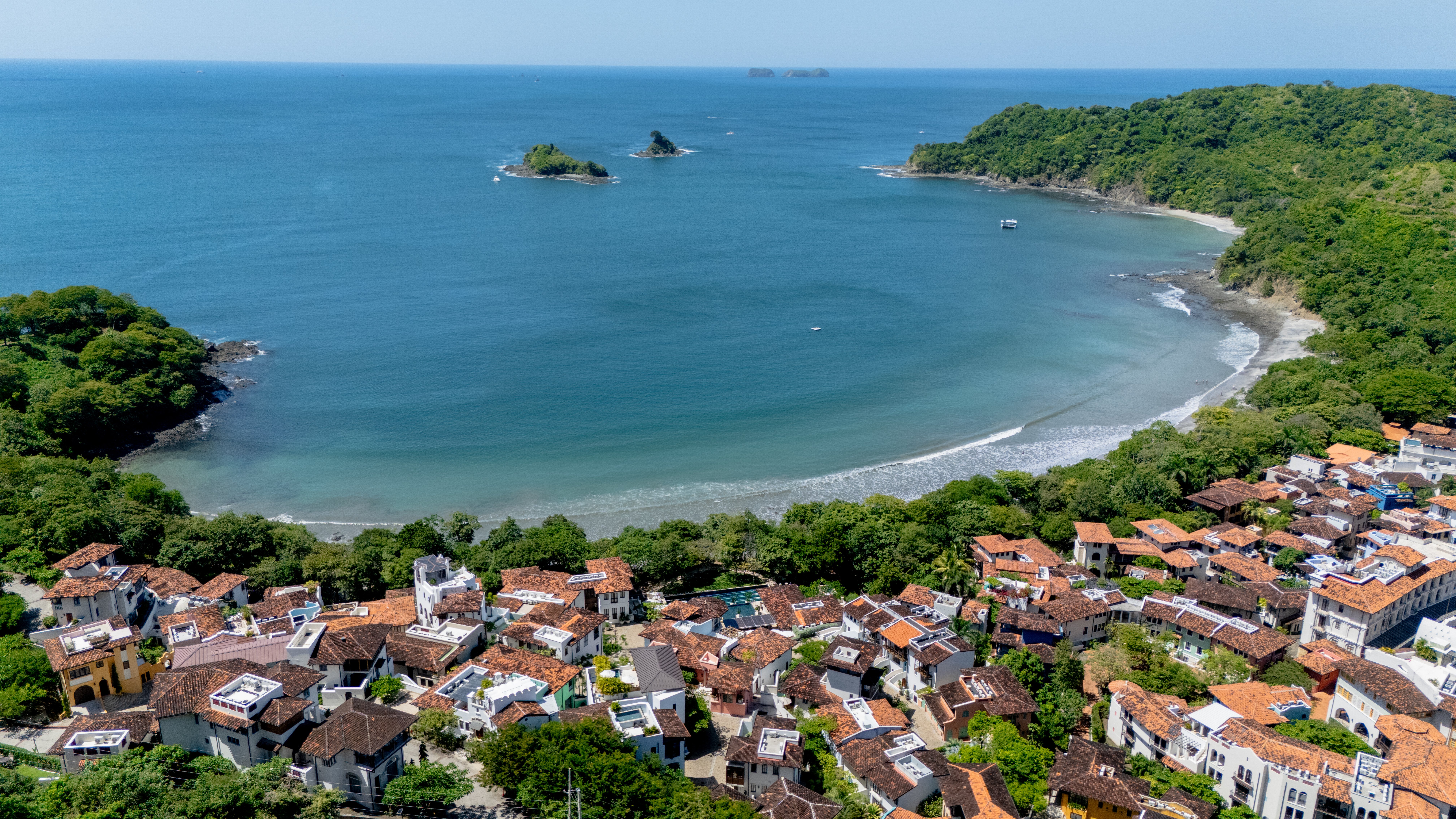
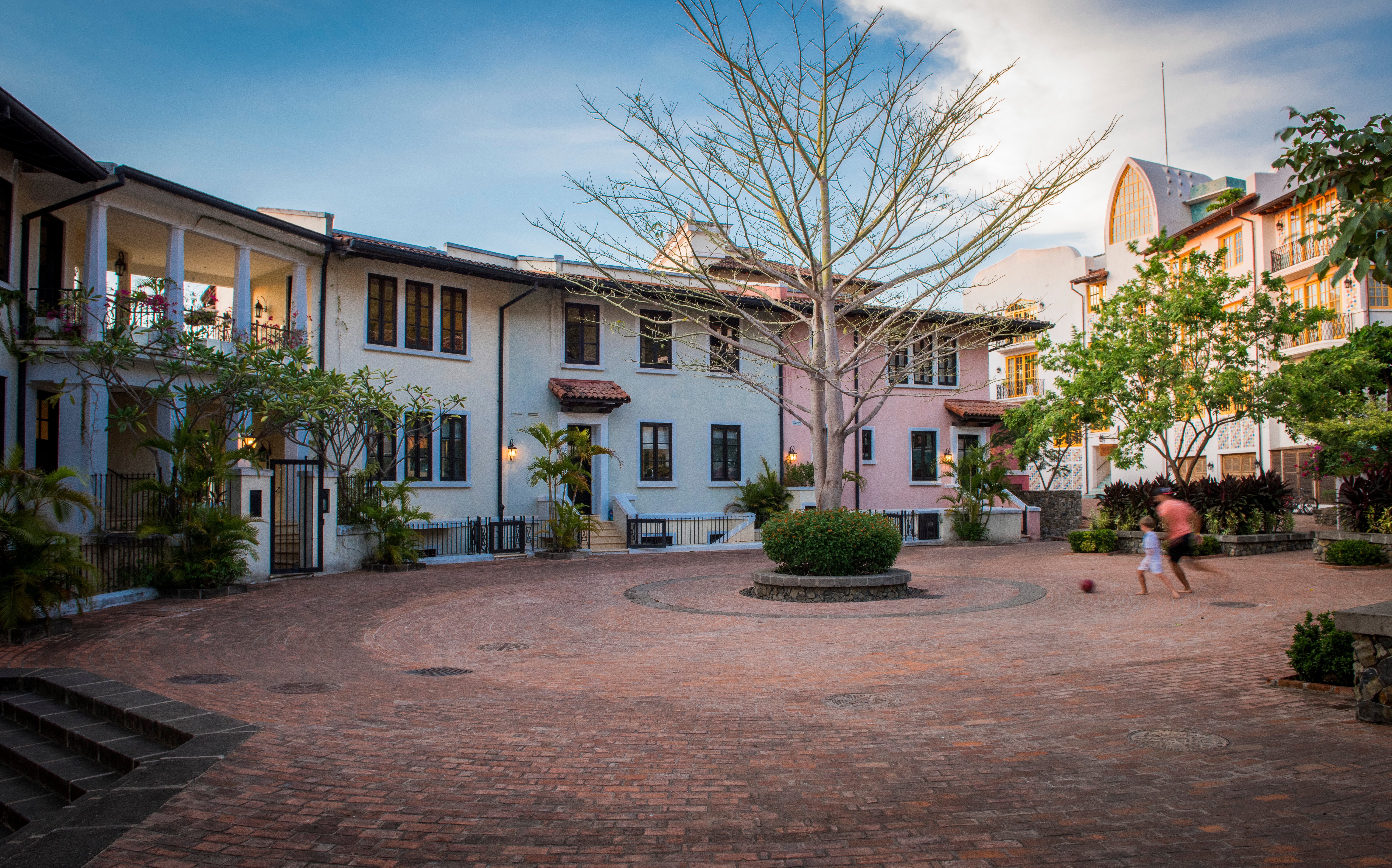
Las Catalinas, just 4 km from Potrero, takes a different approach from the ground up. Designed on New Urbanist principles, it's a pedestrian-first beach town where infrastructure was planned as a system rather than added reactively. Elevation planning and drainage design address the flooding risks that affect lower-lying communities, and the town does not experience the river flooding and bridge-submersion issues that periodically isolate places like Nosara. The trail network, spanning over 42 kilometers, doubles as a firebreak system supported by an active fire brigade that conducts regular patrols. Within the community, stores, a daycare, medical facilities, banks, and restaurants are all within walking distance. Schools and hospitals are a 15 to 20 minute drive. For families especially, the combination of walkability, safety, and active outdoor infrastructure addresses concerns that other parts of the coast leave unresolved.
10. Business Opportunity in a developing Region
Guanacaste is in active development, and that creates a specific kind of opportunity. Services that are taken for granted in mature markets, reliable contractors, well-run specialty retail, professional services, quality food logistics, remain scarce relative to demand.
For someone arriving with capital and an entrepreneurial orientation, the gap between what exists and what the growing market needs can be significant. Costa Rica's political stability and strong digital connectivity make it a viable base for remote work and international business. The regulatory process is slower than most buyers expect, and local knowledge accelerates everything. But for the right person with the right concept and the patience to navigate it, Guanacaste rewards initiative.
11. More than a property: a change of lifestyle
One of the most meaningful shifts that happens after relocating to Guanacaste has nothing to do with the property itself. It has to do with the structure of everyday life.
Much like the sloths that have become something of a symbol for Costa Rica, life here moves at a slower, more deliberate pace. The sense of urgency that defines most urban environments begins to soften, and with it, the constant pressure to do more, move faster, and fill every hour with something productive. That decompression is real, and for most people who make the move, it turns out to be one of the things they value most.
It does come with practical adjustments. Mail takes longer. Construction takes longer. Most things take longer. The convenience of same-day delivery, late-night takeout, or finding everything you need within a few blocks is not part of life here. Grocery runs often mean visiting more than one store, and the drive to Liberia for certain items becomes a normal part of the weekly routine. Most shops and restaurants close by 9 pm, and the options for late-night entertainment or spontaneous retail are limited.
Despite growing development across the province, Guanacaste remains rural at its core. You share roads with cattle, wake up to howler monkeys, and plan ahead rather than improvise. The absence of dense urban infrastructure is not a flaw in the system. It is the system, and it changes how time is experienced in ways that take some getting used to and then become hard to give up.
What fills the space left by those urban conveniences is a life organized around the natural environment. Schedules here are shaped by sunrise and sunset, by tides and temperatures, by the best window of the morning to surf or run or bike before the heat builds. People tend to go to bed earlier and wake up earlier, not out of discipline but because the environment makes it the obvious thing to do. Evenings often mean dinner with neighbors, a sunset walk, and an early night. The social life is simple and genuinely local.
For people who draw energy from the variety and stimulation of city living, this adjustment is real and worth thinking about honestly before buying. For those looking for a life centered around community, physical health, and a slower pace, what might look like limitation from the outside turns out to be exactly the environment that makes that life possible.
Land values along the Guanacaste coast have increased dramatically over the past decade. That has created employment and economic activity, but it has also pushed housing costs well beyond what local Costa Rican salaries can support. The coastal lifestyle is a privileged one, and it's worth being honest about that.
A U.S. or Canadian salary in Guanacaste carries purchasing power that local wages don't approach. That asymmetry has real effects on the communities that have been here far longer than any recent buyer. It's not an argument against purchasing, but it is a reason to be a conscious neighbor: hire locally, spend at local businesses, participate in community life, and be genuinely attentive to your environmental footprint. The ecosystems here, reefs, rivers, forest, require active care, not just appreciation. How you manage waste, how you use the ocean, how you treat the land you own affects people and systems beyond your property line.
12. Finding the Right Guidance
Buying property in Guanacaste is not only about finding a beautiful home near the beach. It is about understanding how that home will function in real life.
After looking at titled land, concession land, water access, roads, infrastructure, schools, healthcare, HOA structures, construction budgets, resale dynamics, and location specific risks, one thing becomes clear: the best decision is rarely based on one single feature. A property may have an extraordinary view, but limited access. Another may offer privacy, but require more planning around schools, water, or daily services. Another may be perfect for vacations, but less practical for long stays or family life.
That is why the right guidance matters. Not because buyers need to be pushed toward a decision, but because they need help understanding what each decision will mean over time.
For some buyers, Las Catalinas becomes a compelling answer to many of the trade offs explored in this guide. It offers a beachfront, walkable Town where daily life is designed around proximity rather than car dependency. The beach, restaurants, shops, services, outdoor spaces, trails, childcare, and community life are all close by. At the same time, many of the practical questions buyers often face in Guanacaste have already been considered through planning, infrastructure, and long term management, including water storage, stormwater systems, fire management, trails, and a built environment designed for everyday use.
Its location also helps preserve access to the broader rhythm of Guanacaste. Families can reach schools and healthcare within a practical drive, Liberia International Airport is close enough for international travel, and nearby destinations such as Playa Grande, Avellanas, Negra, Tamarindo, and other coastal communities remain accessible for surfing, dining, shopping, or a change of scene. For buyers who want beach life without giving up essential comforts, this balance can be especially valuable.
Still, Las Catalinas is not the right match for everyone, and that is part of what good guidance should make clear.
The Sales Team at Las Catalinas has spent years working within this community and the broader Guanacaste market, guiding buyers and sellers across pre construction residences, developer projects, titled lots, resale homes, and custom home opportunities. Their role is not simply to sell what is available, but to help buyers understand what actually fits their needs, timeline, budget, lifestyle, and long term goals.
That distinction matters. A young family, a remote worker, a retiree, an investor, and someone looking for a seasonal home may all be looking at the same map of Guanacaste, but they are not looking for the same life. The right property should support the way a buyer wants to live, not just look good during a visit.
In a market where emotions can move quickly, good guidance creates space for better questions. What kind of access do you need year round? How important is rental potential? Do you want to be close to schools, healthcare, restaurants, and services? Are you comfortable managing land, construction, or maintenance from abroad? Do you want privacy, community, walkability, surf access, or a combination of all of these?
Choosing well means understanding the trade-offs before they become surprises. It means working with people who know the details, who can explain the options clearly, and who are willing to say when something may or may not be the right fit.
The best purchase is not simply the one that checks the most boxes. It is the one that supports the life you are actually hoping to build. And in Guanacaste, where every location carries its own possibilities and compromises, finding the right guidance may be one of the most important decisions you make.
.jpg?width=5994&height=4000&name=DSC_0175%20(1).jpg)